 教师个人主页教师个人主页
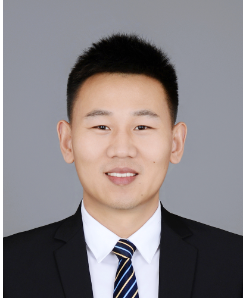

教师姓名:郭辉

职称:研究员

职务:Associate Dean

教师拼音名称:guohui

性别:男

所在单位:生命科学学院

学历:博士研究生毕业

入职时间:2014-04-16

学位:博士学位

毕业院校:中南大学

在职信息:在职

学科:基础医学. 生物学

招生学科:生物学、基础医学


Hui Guo, PhD, is a Professor (Research Track) and PhD supervisor at Central South University.
He received his Bachelor of Science degree in Biological Sciences from Central South University in June 2008. In the same year, he was admitted, through the recommendation-based admission scheme, to the master’s program in Genetics at the State Key Laboratory of Medical Genetics. In September 2010, he transferred to the doctoral program ahead of schedule. From October 2011 to October 2012, supported by the China Scholarship Council’s Joint PhD Training Program, he undertook joint doctoral training and research in the laboratory of Daniel R. Weinberger, a member of the US National Academy of Medicine, at the National Institute of Mental Health (NIMH), National Institutes of Health (NIH), USA. He received his PhD in Genetics from the State Key Laboratory of Medical Genetics in December 2013.
In 2014, he joined the School of Life Sciences at Central South University as a Lecturer and received support through the university’s Shenghua Lieying Talent Program. He was promoted to Associate Research Professor through an exceptional promotion in 2015. From 2017 to 2019, he conducted collaborative research as a visiting scholar and received postdoctoral training in the laboratory of Professor Evan E. Eichler, a member of the US National Academy of Sciences, at the University of Washington School of Medicine. He was promoted to Professor (Research Track) at Central South University in 2020, appointed Head of the Department of Genetics in 2022, and appointed Associate Dean of the School of Life Sciences in 2023.
Dr. Guo’s laboratory combines medical genetics and bioinformatics with neurobiology, cell biology, biochemistry, molecular biology, and model-organism approaches to investigate genetic regulatory mechanisms and precision diagnosis and treatment for autism and other neurodevelopmental disorders. His work as a corresponding author has been published in the Journal of Clinical Investigation (2025, 2022), Molecular Psychiatry (2026a, 2026b, 2024), Science Advances (2022, 2019), Proceedings of the National Academy of Sciences (2026), and the American Journal of Human Genetics (2026, 2020). He has led five projects funded by the National Natural Science Foundation of China, including an Excellent Young Scientists Fund project, and has undertaken projects under the major national program on Brain Science and Brain-Inspired Research.
He was selected for the inaugural Young Elite Scientists Sponsorship Program of the China Association for Science and Technology, the Hunan Leading Talents in Science and Technology Innovation Program, the Hunan Distinguished Young Scholars Program, the Hunan Furong Young Scholars Program, and the Huxiang Young Talents Program. His awards include the First Prize in Natural Sciences of the National Maternal and Child Health Science and Technology Award, an Outstanding Achievement Award recognizing China’s emerging science and technology figures, and the Second Prize of the Hunan Provincial Teaching Achievement Award.
He serves as a Council Member of the Genetics Society of China, Secretary-General of the Branch of Childhood Cognition and Brain Dysfunction of the Chinese Neuroscience Society, a member of the Youth Committee of the Genetics Society of China, and a member of its Behavioral Genetics Branch. He is an Associate Editor of Cellular and Molecular Life Sciences and has reviewed manuscripts for Cell Research, the American Journal of Human Genetics, Molecular Psychiatry, Genome Medicine, Cell Reports, EMBO Molecular Medicine, and Genetics in Medicine.
实验室研究方向:孤独症及相关神经发育障碍的遗传调控机制
[1] 孤独症的遗传结构:利用基因组学和遗传统计等手段,鉴定孤独症相关的风险变异,特别关注非编码风险变异及其遗传调控机制,解析孤独症新的遗传机制和个体水平的遗传结构。
[3] 孤独症及相关神经发育障碍的共性分子机制:综合利用分子生物学、细胞生物学、神经生物学和功能基因组学等手段,研究孤独症及相关神经发育障碍的共性分子致病机制,探索可能的干预和治疗策略。
[4] 基因组学在孤独症及相关神经发育障碍早期诊断和预警中的应用:构建孤独症等神经发育障碍的基因组信息解读系统,开发孤独症等神经发育障碍的早期诊断和风险预警体系。
实验室招生:
1. 硕士生和博士生:
基本要求:对科学好奇,踏实刻苦,有较强的自主学习和思考问题能力,有较好的沟通表达能力,有较好的中英文写作能力。
专业背景:生物学,医学,统计学,计算机学等。
2. 本科生:
每年可为2-3项本科生自由创新项目提供指导和研究平台。
每年可为1-2名本科生提供毕业设计指导和研究平台。
在实验室开展科研训练的收获:
1. 知识:前沿的遗传学,基因组学及分子生物学知识。
2. 技能:分子、细胞、动物实验操作技能;组学数据处理技能;国际交流、英文写作能力;逻辑思维能力。
欢迎感兴趣的学生到实验室参观交流,联系方式:
1. 地址:湖南长沙湘雅路110号医学遗传学研究中心 邮编:410078
2. 邮箱:guohui@sklmg.edu.cn
3. 电话:0731-84805340,18613961223

›. 湖南省高层次人才支持计划项目:湖湘青年英才;项目编号:2019RS2005;起止日期:2020.01-2022.12;主持;在研
›. 中南大学创新驱动计划项目:孤独症的遗传基础和发病机制研究;项目编号:2020CX042;起止日期:2020.01-2022.12;主持;在研
›国家自然科学基金:. 国家自然科学基金面上项目:孤独症基因型-表型关联研究及新致病基因的鉴定;项目编号:81871079;起止时间:2019.01-2022.12;主持,在研(81871079),郭辉
›国家自然科学基金:. 国家自然科学基金面上项目:CSDE1基因组转录后调控及其在神经发育和孤独症发生中的作用机制研究;项目编号:31671114;起止日期:2016.01-2020.12;主持;在研(31671114),郭辉,开始日期:2017-01-01,立项时间:2016-08-20,结项时间:2020-12-31.
›中国科学技术协会(中国遗传学会):. 中国科协青年人才托举工程项目:孤独症基因型-表型关联研究;项目编号:YESS20150035;起止时间:2015.11-2017.06;主持;已结题,郭辉,开始日期:2015-11-01,立项时间:2015-11-01,结项时间:2018-06-30.
›中南大学创新驱动计划:. 中南大学创新驱动计划项目:孤独症临床遗传学研究及早期诊断和早期预警体系的建立;项目编号:2016CX038;起止日期:2016.01-2017.12;主持;已结题,郭辉,开始日期:2016-01-01,结项时间:2017-12-31.
›国家自然科学基金:. 国家自然科学基金青年基金项目:孤独症相关基因CNTN4在神经元生长过程中的作用机制研究;项目编号:31400919;起止日期:2015.01-2017.12;主持;已结题(31400919),郭辉,开始日期:2015-01-01,立项时间:2014-08-01,结项时间:2017-12-31.
›中南大学升华猎英人才支持计划:. 中南大学升华猎英人才支持计划项目:孤独症的遗传基础及发病机制研究;起止日期:2014.10-2016.10;主持;已结题,郭辉,开始日期:2014-11-19,结项时间:2019-12-31.

›Jia X, Zhang S, Tan S, et al. De novo variants in genes regulating stress granule assembly associate with neurodevelopmental disorders.Sci Adv, 2022, 8 (33) : eabo7112.
›Chen G, Yu B, Tan S, et al. GIGYF1 disruption associates with autism and impaired IGF-1R signaling.J Clin Invest, 2022, 132 (19) : e159806.
›Wilfert AB, Turner TN, Murali SC, et al. Recent ultra-rare inherited mutations implicate novel autism candidate risk genes.Nat Genet, 2021, 53 (8) : 1125-1134.
›Guo H, Zhang Q, Dai R, et al. NCKAP1 Disruptive Variants Lead to a Neurodevelopmental Disorder with Core Features of Autism.Am J Hum Genet, 2020, 107 (5) : 963.
›Wang T, Hoekzema K, Vecchio D, et al. Large-scale targeted sequencing identifies risk genes for neurodevelopmental disorders.Nature Communication, 2020, 11 (1) : 4932.
›Guo H, Li Y, Shen L, et al. Disruptive mutations of CSDE1 associates with autism and interferes with neuronal development and synaptic transmission.Science Advances, 2019, 5 (9) : eaax2166.
›Salpietro V, Dixon CL, Guo H, et al. AMPA receptor GluA2 subunit defects are a cause of neurodevelopmental disorders.Nat Commun, 2019, 10 (1) : 3094.
›Guo H, Duyzend MH, Coe BP, et al. Genome sequencing identifies multiple deleterious variants in autism patients with more severe phenotypes.Genet Med, 2019, 21 (7) : 1611-1620.
›Guo H, Bettella E, Marcogliese PC, et al. Disruptive mutations in TANC2 define a new neurodevelopmental syndrome associated with psychiatric disorders.Nat Commun, 2019, 10 (1) : 4679.
›Guo H, Wang T, Wu H, et al. Inherited and multiple de novo mutations in autism/developmental delay risk genes suggests a multifactorial model.Mol Autism, 2018, 9: 64.
›Geisheker M, Heymann G, Wang T, et al. Hotspots of missense mutation identify neurodevelopmental disorder genes and functional domains.Nat Neurosci, 2017, 20 (8) : 1043-1051.
›Wang T, Guo H, Xiong B, et al. De novo genic mutations among a Chinese autism spectrum disorder cohort.Nat Commun, 2016, 7: 13316.
›Guo H, Tong P, Liu Y, et al. Mutations of P4HA2 encoding prolyl 4-hydroxylase 2 are associated with non-syndromic high myopia.Genet Med, 2015, 17 (4) : 300-306.
›Guo H, Tong P, Peng Y, et al. Homozygous loss-of-function mutation of the LEPREL1 gene causes severe non-syndromic high myopia with early-onset cataract.Clin Genet., 2014, 86 (6) : 575-579.
›Xia K, Guo H, Hu Z, et al. Common variants on 1p13.2 associate with risk of autism.Mol Psychiatry, 2014, 19 (11) : 1212-1219.
›Guo H, Jin X, Zhu T, et al. SLC39A5 mutations interfering BMP/TGF-β pathway in nonsyndromic high myopia.J Med Genet, 2014, 51 (8) : 518-525.

updating......
What Causes Autism?


Genetic Architecture of Autism:We use genomics and statistical genetics to identify genetic variants associated with autism, with a particular focus on noncoding risk variants and their regulatory mec
Molecular Subtyping of Autism and Related Neurodevelopmental Disorders We combine medical genetics and clinical phenomics to identify high-risk genes and genotype–phenotype relationships in autism
Shared Molecular Mechanisms of Autism and Related Neurodevelopmental Disorders We integrate molecular biology, cell biology, neurobiology, and functional genomics to investigate shared molecular me
Genomics for Early Diagnosis and Risk Prediction in Autism and Related Neurodevelopmental Disorders We develop systems for interpreting genomic information in autism and other neurodevelopmental di

专业:遗传学
专业:Genetics |
专业:生物科学

中南大学 › 生命科学学院 › 副院长 › 在岗
中南大学 › 生命科学学院 › 遗传学系主任/支部书记 › 在岗
中南大学 › 生命科学学院 › 研究员 › 在岗
中南大学 › 生命科学学院 › 遗传学系副主任/支部书记
中南大学 › 生命科学学院 › 副研究员
University of Washington › Department of Genome Science › 博士后
中南大学 › 生命科学学院 › 讲师
 中南大学
中南大学 访问量:次
访问量:次